Not sure whether your weight is in a healthy range, but don’t want to do the math by hand? That is exactly why many people search for how to calculate BMI online. A BMI calculator gives you a quick way to estimate body mass index using your height and weight, without needing formulas, conversions, or a calculator app.
This guide explains what BMI is, how online BMI calculators work, how to use one correctly, and what your result actually means. You’ll also learn the limits of BMI, common mistakes to avoid, and when the number is useful as a general health screening tool. If you just want a fast answer, start with the quick section below, then follow the step-by-step instructions.
Quick Answer: How to Calculate BMI Online
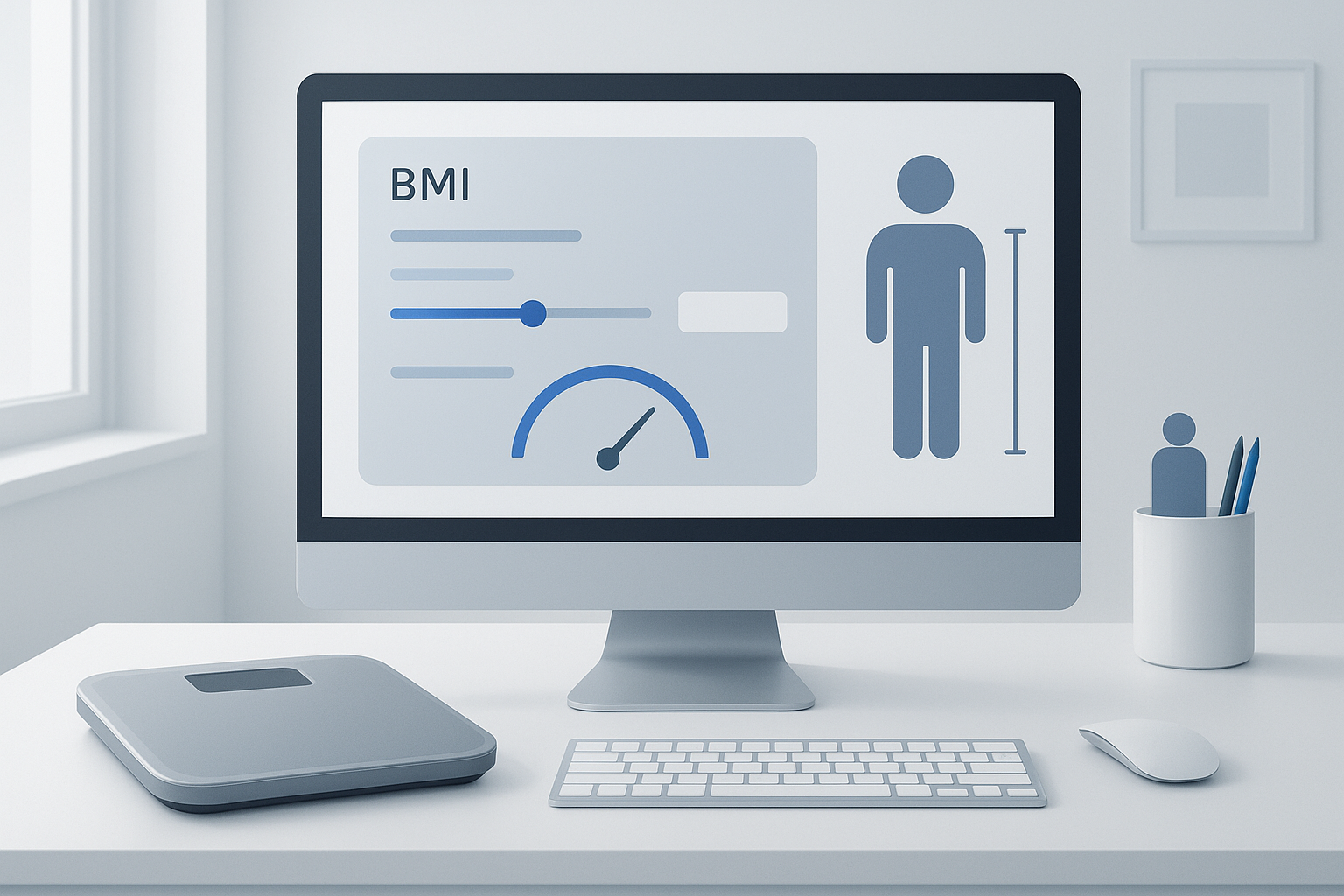
To calculate BMI online, enter your height and weight into a BMI calculator, choose the correct unit system such as kilograms/meters or pounds/inches, and submit the form. The tool automatically applies the BMI formula and shows your result, usually along with a category like underweight, healthy weight, overweight, or obesity.
Suggested Image: Clean BMI calculator interface with height, weight, and result fields
What BMI Means
BMI stands for Body Mass Index. It is a simple measurement that compares body weight to height. Healthcare providers and public health organizations use it as a quick screening method to estimate whether someone may be underweight, at a healthy weight, overweight, or in an obesity range.
The easiest way to understand BMI is this: it does not directly measure body fat, but it helps flag whether your weight may deserve a closer look. According to the CDC’s guidance on adult BMI, it is best used as a screening tool rather than a diagnosis.
BMI is useful for quick screening, but it is not a complete picture of health.
Why People Use an Online BMI Calculator
Most people use an online BMI calculator because it is fast, simple, and reduces basic input errors. You do not need to remember formulas or manually convert units. That makes it helpful for everyday users, students, fitness beginners, and anyone checking general health metrics.
- Convenience: You enter your numbers and get an instant result.
- Fewer calculation mistakes: The calculator handles the formula automatically.
- Easy unit support: Many tools allow metric and imperial measurements.
- Clear interpretation: Results often include standard BMI categories.
- Useful for quick checks: Good for basic monitoring over time.
How BMI Is Calculated
If you want to understand what the calculator is doing behind the scenes, the formula is straightforward. The exact formula depends on whether you are using metric or imperial units.
Metric Formula
When using kilograms and meters:
BMI = weight (kg) ÷ height (m²)
Imperial Formula
When using pounds and inches:
BMI = [weight (lb) ÷ height (in²)] × 703
Example: if someone weighs 70 kg and is 1.75 m tall, the BMI calculation is:
70 ÷ (1.75 × 1.75) = 22.86
That would usually fall within the healthy weight range for adults.
How to Calculate BMI Online Step by Step
If your goal is speed and accuracy, an online calculator is the easiest method. Here’s a simple workflow.
- Open a BMI calculator. Use a tool that clearly asks for height and weight and shows which units it accepts.
- Choose your measurement system. Select metric if you know your weight in kilograms and height in centimeters or meters, or imperial if you use pounds and feet/inches.
- Enter your height carefully. This is where many mistakes happen. Double-check whether the tool wants centimeters, meters, or separate feet and inches.
- Enter your current weight. Use the same unit system you selected. Do not mix pounds with centimeters unless the calculator explicitly supports that combination.
- Submit the calculation. The tool will process your values and display a BMI number.
- Read the category, not just the number. Most tools also explain whether the result falls into underweight, healthy weight, overweight, or obesity ranges.
- Treat the result as a screening signal. If the result concerns you, use it as a starting point for a broader health conversation, not as a final diagnosis.
Standard BMI Categories for Adults
Online tools typically classify adult BMI results using well-known public health ranges. These ranges help readers interpret the number quickly.
| BMI Range | Category | General Meaning |
|---|---|---|
| Below 18.5 | Underweight | Weight may be lower than recommended for height |
| 18.5 to 24.9 | Healthy Weight | Generally considered a typical range for adults |
| 25.0 to 29.9 | Overweight | May suggest increased health risk depending on other factors |
| 30.0 and above | Obesity | Higher range that may be linked with added health risks |
These categories are commonly used for adults, but they are not universal for every age group or body type. For children and teens, BMI is interpreted differently and often uses age- and sex-based percentiles. The National Heart, Lung, and Blood Institute BMI resource is a reliable reference for standard adult ranges.
How to Get a More Accurate BMI Result Online
The calculator can only work with the information you provide. Small input mistakes can change the outcome, especially height errors. Before you begin, keep these points in mind.
- Use recent measurements. Old weight estimates reduce accuracy.
- Confirm the unit type. Metric and imperial values should never be mixed accidentally.
- Enter full height correctly. For example, 5 feet 10 inches is not the same as 5.10 feet.
- Read decimals carefully. 1.6 m and 1.06 m are very different values.
- Check whether the result is for adults. BMI interpretation differs for children and teens.
When BMI Is Useful
BMI is helpful when you need a quick, general screening tool. It is especially useful for identifying whether weight may be outside a common adult range and whether a fuller health review could be worthwhile.
Useful Everyday Situations
- Checking your weight range during a general health review
- Following broad progress over time
- Using the same method consistently for basic comparison
- Supporting conversations with a doctor, dietitian, or fitness professional
- Completing forms or health questionnaires that ask for BMI
Practical Example
A person starts a walking routine and wants a simple metric to compare every few months. BMI is not the only measure they should use, but it can help show whether their overall weight relative to height is trending upward or downward. In practice, this works best when paired with other indicators such as waist measurement, energy levels, and guidance from a qualified health professional.
What BMI Does Not Tell You
Here’s where many beginners get confused. BMI is a useful estimate, but it does not measure body fat percentage, muscle mass, bone density, or where fat is stored in the body. That means two people can have the same BMI and very different health profiles.
- It does not separate muscle from fat. Muscular people may have a higher BMI without having excess body fat.
- It does not show fat distribution. Abdominal fat may matter more for health risk than BMI alone.
- It is not a diagnosis. A single number cannot fully describe cardiometabolic health.
- It is less precise for some individuals. Pregnancy, aging, athletic build, and certain medical conditions can affect interpretation.
The World Health Organization’s obesity and overweight guidance also makes clear that weight-related health risk should be understood in a broader context.
Common Mistakes When Calculating BMI Online
Most BMI calculator problems come from user input, not from the formula itself. Avoiding these mistakes will make your result much more reliable.
Using the Wrong Units
This is the most common issue. Someone enters pounds into a metric calculator or enters centimeters where meters are required. The result may look precise, but it will be wrong.
How to avoid it: Double-check the unit labels before submitting.
Typing Height Incorrectly
People often enter 5.8 when they mean 5 feet 8 inches. In decimal feet, 5.8 means something different.
How to avoid it: Use the calculator’s separate feet-and-inches fields if available, or convert carefully.
Assuming BMI Works the Same for Everyone
BMI categories are general screening ranges. They are not equally meaningful for children, athletes, pregnant individuals, or some older adults.
How to avoid it: Use BMI as a starting point, not the final word.
Focusing Only on the Label
Some readers see a category like “overweight” and assume it tells the whole story. It does not.
How to avoid it: Consider other health measures and speak with a qualified professional if you need personal advice.
Online BMI Calculator vs Manual Calculation
Both methods can work. The best approach depends on what you’re trying to accomplish.
| Method | Best For | Main Benefit | Main Limitation |
|---|---|---|---|
| Online BMI Calculator | Most users | Fast and simple | Still depends on accurate inputs |
| Manual Formula | Students, analysts, or people checking the math | Shows how the calculation works | More room for unit and arithmetic errors |
Limitations of Calculating BMI Online
There is an important limitation to understand: an online tool can calculate the formula correctly, but it cannot make clinical judgments about your overall health. It only processes the values you enter.
- Input quality matters. Wrong numbers produce wrong results.
- Different tools may present categories differently. The formula is standard, but wording can vary.
- Not all calculators are designed for all age groups. Adult and child interpretation is different.
- Health context is missing. BMI alone does not include blood pressure, activity level, family history, or metabolic markers.
Troubleshooting BMI Calculator Issues
If an online calculator gives a strange result, the issue is usually easy to fix. A simple workflow looks like this.
- Recheck your units. Make sure you did not mix pounds with meters or kilograms with inches.
- Verify your height format. Feet-and-inches entries are especially easy to mistype.
- Look for decimal problems. A misplaced decimal can change the result dramatically.
- Reload and try again. Sometimes a browser form does not register a field properly.
- Compare with a manual check. If the result still seems wrong, use the formula once by hand to confirm.
If you save useful health tools, research pages, or reference resources and open them often, a web productivity tool like OpenMultiURL can help reduce repetitive browsing by opening multiple URLs at once. That is especially handy if you keep a small list of trusted calculation and health-reference pages for regular use.
Best Practices for Using Health Calculators Online
Not every online tool is equally trustworthy. Even for a simple calculation, it helps to use reputable resources and basic web safety habits.
- Use clear, transparent tools. A good calculator should show what it needs and what result it gives.
- Prefer trusted health information sources. Official public health resources are better for interpreting the result.
- Do not enter sensitive personal information unless necessary. A BMI tool usually only needs height and weight.
- Check the URL before using unfamiliar sites. Make sure the page is legitimate and uses
https://where appropriate. For general background, MDN’s explanation of what a URL is can help if you are unsure how web addresses work. - Use the result as a screening tool only. Personal medical decisions should involve professional advice.
Frequently Asked Questions
1. Can I calculate BMI online for free?
Yes. Many BMI calculators are free to use because the math is simple and does not require complex software. You usually only need to enter height and weight, choose your unit system, and view the result. Even when the calculator is free, it is still smart to use a reputable website and avoid sharing unnecessary personal information.
2. Is calculating BMI online accurate?
The calculation itself is accurate if you enter the correct numbers and use the right units. The formula is standardized. However, the usefulness of the result depends on context. BMI is a screening value, not a full health assessment. It can be mathematically correct while still being incomplete for athletes, older adults, or people with unusual body composition.
3. What information do I need to use a BMI calculator?
In most cases, you only need your height and weight. Some calculators ask you to choose metric or imperial units first. A few may also ask for age or sex, but that is usually for extra context or related estimates rather than for the basic adult BMI formula itself. Always check the unit labels before you submit the form.
4. What is a healthy BMI range for adults?
For most adults, a BMI from 18.5 to 24.9 is commonly classified as a healthy weight range. Below 18.5 is generally considered underweight, 25.0 to 29.9 is overweight, and 30.0 or above is obesity. These categories are widely used for screening, but they do not replace personalized health advice or more detailed measurements.
5. Is BMI useful for children and teenagers?
Yes, but not in the same way as for adults. BMI for children and teens is usually interpreted using age- and sex-specific growth percentiles rather than standard adult ranges. That means an adult BMI calculator may not be the right tool for younger users. If the calculation is for a child or teenager, use a resource designed specifically for that age group.
6. Why does my BMI seem too high if I am muscular?
BMI does not distinguish between muscle and fat. Because muscle is dense, a very fit or muscular person may have a BMI that falls into an overweight range even when their body fat level is not high. This is one of the best-known limitations of BMI. In those cases, measurements like waist circumference, body fat percentage, and clinical context may provide better insight.
7. Should I rely on BMI alone to judge my health?
No. BMI is best used as one data point. It can be helpful for quick screening, but it does not include factors such as blood pressure, cholesterol, blood sugar, activity level, sleep, nutrition, family history, or fat distribution. If a BMI result concerns you, the next step should be broader evaluation rather than self-diagnosis based on one number.
8. Can I track BMI over time?
Yes. Tracking BMI periodically can help you notice broad trends, especially if you measure height and weight consistently and use the same unit system each time. It is most useful when combined with other markers such as waist size, exercise habits, and how you feel physically. For regular tracking, record the date and method so your comparisons stay consistent.
Conclusion
If you were looking for how to calculate BMI online, the simplest answer is to use a reliable BMI calculator, enter your height and weight carefully, and read the result as a general screening measure rather than a diagnosis. The number is easy to get, but understanding what it can and cannot tell you matters just as much.
For repeat web tasks like opening saved health resources, research pages, or tool lists, OpenMultiURL can help you open multiple URLs at once and reduce repetitive browser work. If you regularly use online tools for everyday tasks, that kind of simple workflow can save time while keeping your browsing organized.